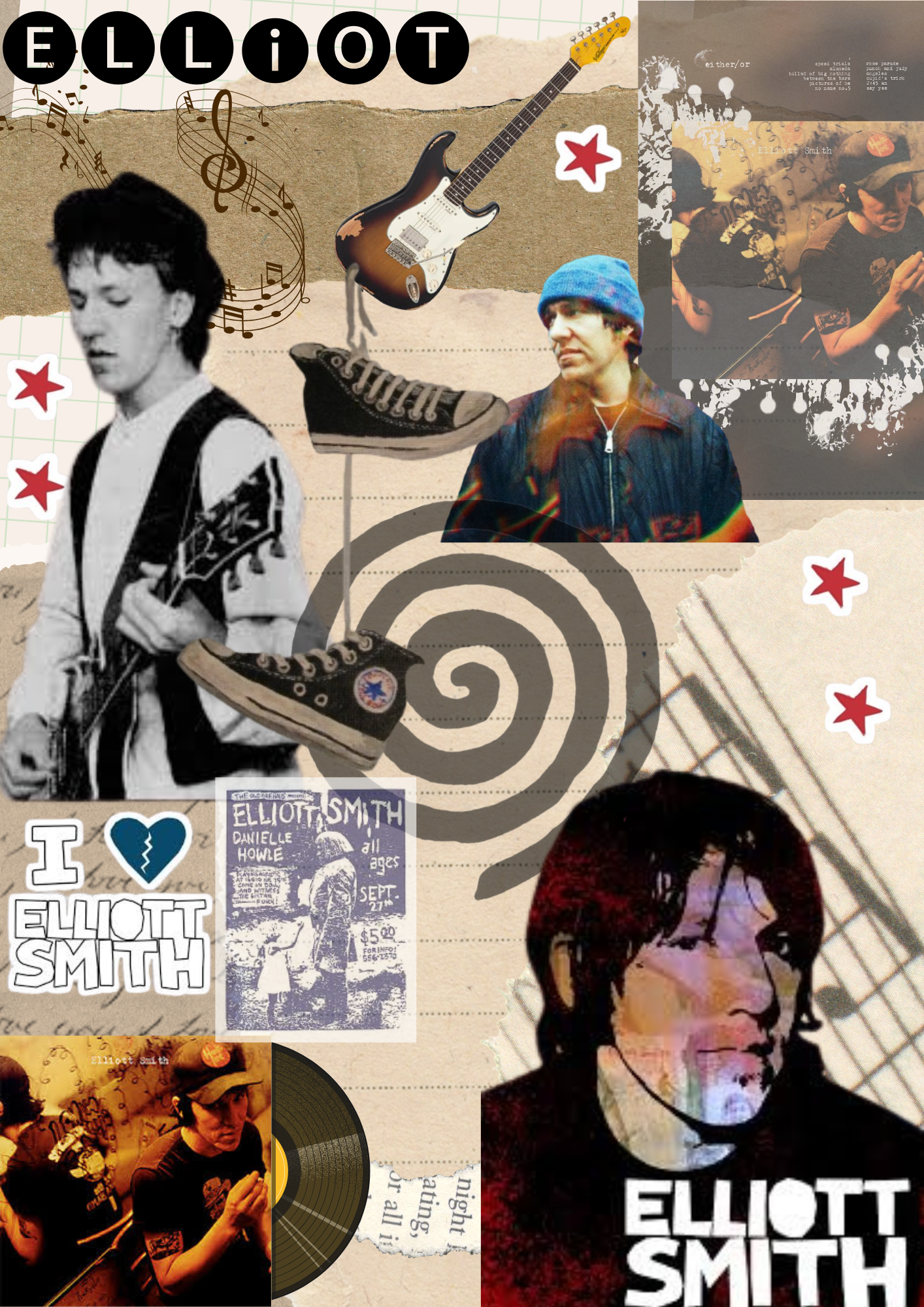
Romanticizing life is a philosophy that is generally normalized across social media and social norms, proven to change perceptions of difficulties from a negative to a more positive light. This “romanticization” occurs when an individual glorifies their situation rather than understanding the gravity of it. For instance, romanticizing schoolwork alleviates the academic pressure felt by the individual by presenting it as an aesthetic. This aesthetic-driven lifestyle has listeners turn to Elliott Smith. Smith, an American singer and songwriter, wrote his third album, “Either/Or,” in association with his personal feelings of detachment, addiction, and existential crises.
This indie-folk album is recognized as one of the greatest albums from the 1990s. Smith’s fan base refers to him as a lyrical genius with his ability to encapsulate the realness of heartbreak, existentialism, and vulnerability. Here are four of 12 tracks from “Either/Or” that testify to Smith’s influential reputation.
—
“Pictures of Me”
“See nothing wrong
So sick and tired of all these pictures of me
Oh everybody’s dying just to get the disease
Everybody’s dying just to get the disease”
Smith illustrates the struggle of a negative self-image and the identity he faces in the public eye. Through the lyrics, Smith can create a contrast between the public interpretation of Smith compared the true version of himself. Smith seems to grasp the immense pressure to create a socially acceptable version of himself that is “good enough” for the public eye.
“Punch and Judy”
“I used to like it here
It just bums me out to remember
Can’t you ever treat anyone nice?
Think I’m gonna make the same mistake twice?”
The smooth lyrics of the song dive into the feelings of growing apart from a person or place that once provided comfort. Additionally, there is an underlying metaphor through the title of the song that reflects traumatic childhood trauma and abuse, a parallel to the puppet show “Punch and Judy.”
“2:45 AM”
“It’s 2:45 in the morning
And I’m putting myself on warning
For waking up in an unknown place
With a recollection of you half-erased
Lookin’ for somebody’s arms
To wave away past harms”
Smith depicts the challenges after self-actualization and healing. Specifically, Smith captures the intensity of his past traumas from the cruel relationship he had with his father, and defies the idea that healing is linear. Smith captures the general feeling of insomnia when contemplating one’s worth as they sit in perpetual silence. Ultimately, emotional turmoil leads to epiphanies, and allowing yourself to accept this paradox of heartbreak gets you one step closer to becoming stronger.
“Say Yes”
“Crooked spin can’t come to rest
I’m damaged bad at best
She’ll decide what she wants
I’ll probably be the last to know
No one says until it shows, see how it is
They want you or they don’t
Say yes”
Smith captures the ups and downs of yearning for another by acknowledging how one initially appears demanding when they have the absurd expectation for their soulmate to say “yes” to their proposal. In most cases, it is generally known that the worst thing they can say is “no.” However, when reality hits with rejection, Smith acknowledges how it is normal to be angry, having feelings of betrayal, while feeling optimistic amidst uncertainty as well. He also resembles a state of acceptance and a possibility of reconciliation, depicting heartbreak as an enlightenment that ultimately supplies future endeavors.
—
The aesthetic lifestyle might seem at the tip of your fingers; however, it’s all temporary. Throughout the album, Smith is able to capture feelings of yearning, love, and heartbreak. Although that feeling of comfort may be difficult to find, there is always something or someone waiting for you.