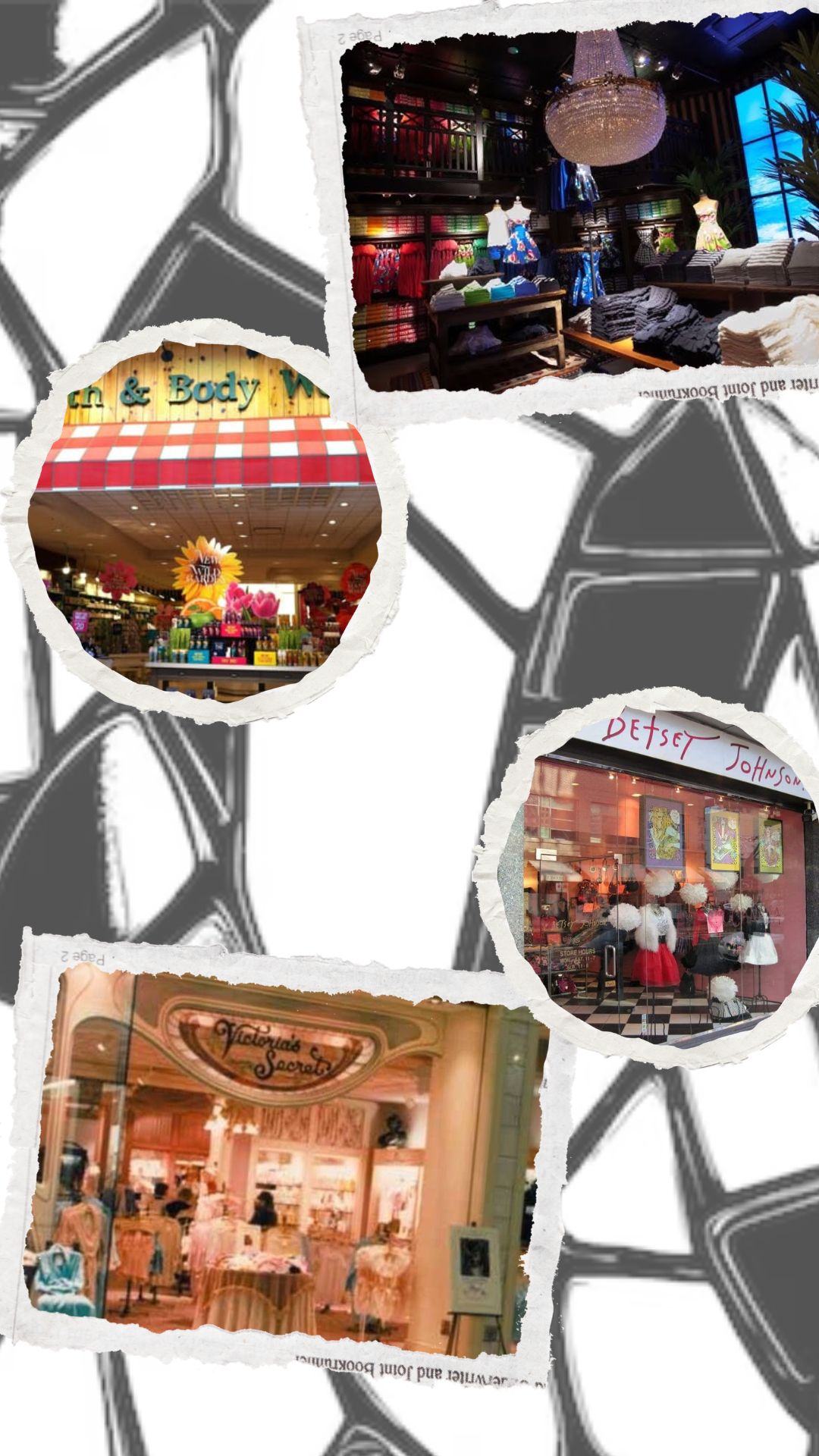
From hitting the mall straight after school, a group photo in front of the mall’s water fall, to going to a concert where there was no phone in sight, digital cameras wilting on wrists, pink striped wall paper, the mahogany dark atmosphere of Hollister and stained glass interior all bring back a sense of nostalgia to any generation. Many would characterize these as staples where you just had to be there. Nowadays, we have malls where the whole retro aesthetic has been seen as outdated in a world that’s continuously evolving. However as the shopping experience becomes more generic, people become absent minded when it feels like you are physically and mentally becoming one within the store. With shopping being scapegoated for overconsumption, society has lost perspective on how the experience is one that’s vulnerable, whether it be retail therapy or an escape from the troubles of adulthood.
Unfortunately for the ones who romanticize shopping, modern retail architecture has been immensely shifted from whimsical and iconic designs to more minimalistic appeals where they don’t have character and mine as well be soulless. Take Victoria’s Secret in the 1990s to early 2000s with ornate stained glass windows and the pink striped wallpaper for instance, where it felt like you were being pampered and validated for spending a hefty fine for feminine essentials. In other words, it was evident that the store’s architecture wanted you to shop there and put in efforts for first impressions. Another well known store for its tangibility would be Hollister back in the early 2000s, with its intense wave of denim and mahogany permeating and how dark it was there. For some, it could have been distracting. However, for others, it could have been a whole vibe and what made Hollister memorable. Because being remembered for clothes is one thing, but being remembered for the experience is a whole other propaganda to fall for.
“I feel as if the modern house and building aesthetic seems more commercial than anything because the basic lifestyle has no personality to it. The modern houses and buildings seems to be more normalized nowadays because of how many people enjoy the clean look rather than wanting to add their own form of personality to their houses or apartment buildings,” Sophia Rivera (9) said.
Now it’s not just retail architecture that is losing its aesthetic, it’s the architecture of our homes and neighborhoods. Just recently, the home from the beloved Christmas classic, “Home Alone,” is being resold and costing a hefty five million dollars to reinvigorate from its past minimalist appearance back to its 1990’s aesthetic. According to Chicago NBC, the home was remodeled in 2018 and was highlighted on social media, where many audiences were distraught to see that its nostalgic appearance has been merked. Some noted that the house looked like a “sterile doctor’s office” and was “incredibly depressing.” There is an epidemic or a domino effect of some sort where Victorian neighborhoods fall into the pressures of minimalistic renovations and their appearance will soon fade as well as its meaning. Their prevalence will be mainly in the United Kingdom, but rare in the United States due to terms of maintaining the house and finding more affordable means with it.
“I do feel that modern buildings now follow a simple blueprint that doesn’t allow creativity to flourish. Everything seems so cookie-cutter, everyone copying each other, no one having their own taste and style in architecture. I personally love when architects add their own touches, because every builder and building has its own story. Nowadays, many buildings have similar designs that adhere to the minimalist aesthetic, and thus it gets rid of personality and life,” Amanda Lyn (11) said.
Some could argue that it’s not about the appearance of the said building, but more of the life you create within it through quality time and bittersweet memories. While that is true, the appearance and experience corresponds with the aesthetic brought with it that people romanticize all over social media to this day. It is interesting and also sad to see a traditional as rare, since you get a taste of the past and embrace the immersiveness within it simultaneously. Therefore, minimalist architecture should be reconsidered in the lens of traditionalists and to bring the culture of authentic shopping back.
“The futuristic aesthetic has its own beauty. Even as someone with a taste more inclined towards traditional aesthetics, I can’t deny that a futuristic one isn’t appealing. The way I see it, it’s associated with innovation and refinement and there’s nothing wrong with that. While I do appreciate the intricacy of the older times, I think the marvel of the futuristic aesthetic itself is the versatility it has to become anything,” Kathyrn Luna (11) said.