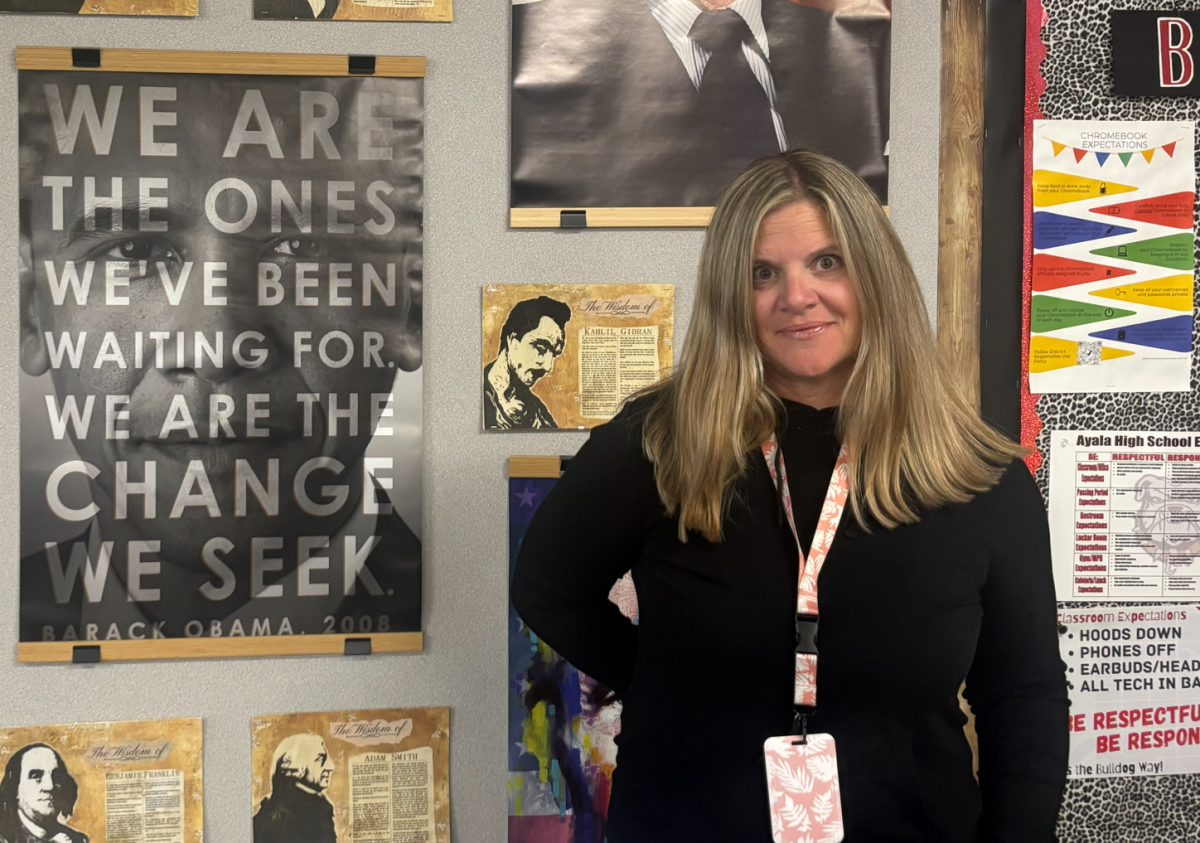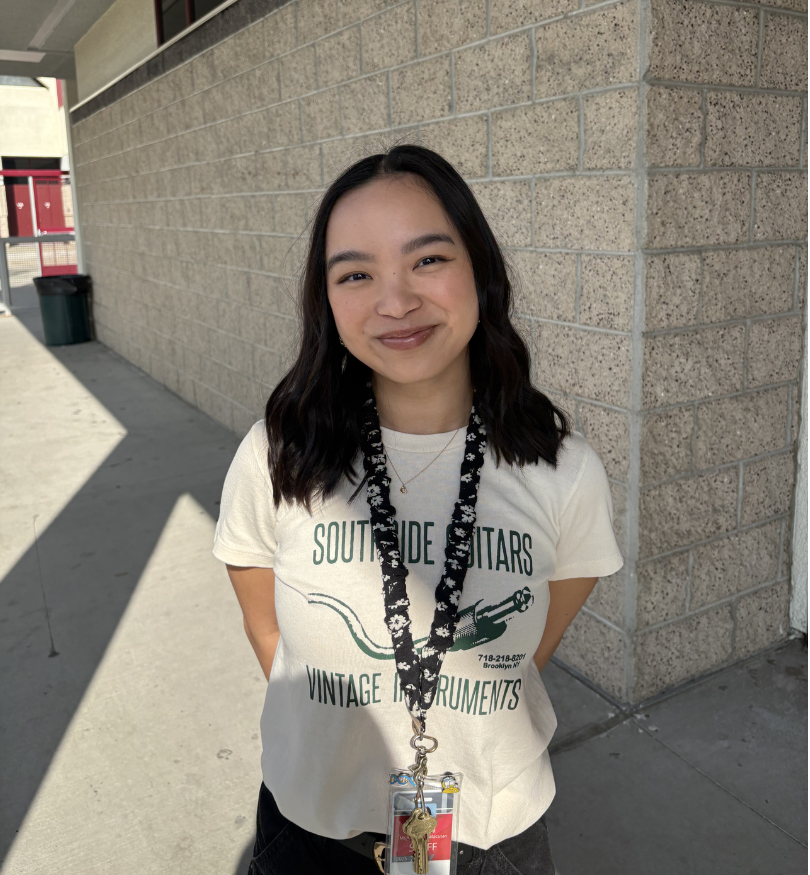
Ms. Danielle Catacutan, a new teacher at Ayala, is someone who brings happiness, energy, and purpose when walking into her classroom. Teaching both Forensic Science and CP Chemistry could easily be difficult, especially when you have never taught it before, yet she puts on a smile and perseveres through it, and makes sure she approaches the challenge in a positive manner.
After teaching ninth-grade biology, going into two new subjects allowed her to grow and develop more knowledge in her science background. She embraces the learning curve, especially in Forensic Science, where she continues to deepen her knowledge while guiding students through exciting, real-world applications of science, by also learning some material for the first time for her as well. Her mindset is well put together and allows her to be fully dedicated to anything that comes her way, and also shows that she is not scared of learning new things.
“The transition into teaching CP chemistry and Forensic Biology has been an interesting one. I am grateful to get the opportunity to learn more about it as time goes on,” Catacutan said.
Keeping her students engaged in class with both subjects isn’t always simple, yet Catacutan makes it one of her top priorities that her students are well focused when she teaches. In Chemistry, she focuses on visual learning by designing slides that help students better understand complex ideas with animations. She also uses repetition and digital assignments with immediate feedback, which helps the students to practice and improve without feeling lost, and understand what they did wrong. Forensic Science, on the other hand, is where her creativity truly shows. She transforms the classroom into an interactive environment filled with labs, mock crime investigations, and engaging activities such as escape rooms and scavenger hunts. These methods help students stay interested while also strengthening their understanding of the material, and also have an interest in learning the curriculum.
“She explained topics step-by-step, instead of rushing through them, so students could keep up. If people were confused, she was patient and willing to re-explain things in a different way,” Yogita Mandal (10) said.
Her teaching style shows a good balance between structure and excitement. While Chemistry builds foundational skills through practice and repetition, Forensics allows students to apply and use those skills in more creative ways. This balance helps students feel both challenged and motivated to try to figure out the mysteries. Many of her labs, like the emission spectrum experiments in Chemistry or toxicology investigations in Forensics, are designed to connect science concepts directly to real life situations, giving the students a better understanding of how the concept is relevant. This idea not only makes learning more interesting but also helps students engage and see the value of what they are learning beyond the classroom.
“When concepts felt confusing, she connected them to things we experience outside of school, which made the material easier to understand and remember,” Mandal said.
This ability to relate science to everyday life is one of Catacutan’s strongest qualities. Instead of rushing through lessons, she takes the time to explain concepts step by step and re-explain them in different ways when needed, using concepts many teachers do not reach for. This patience helps students feel supported, especially in a subject that can often feel intimidating and overwhelming.
In addition to her teaching methods, Catacutan creates an environment where students feel comfortable and included. Her classroom is full of hard-to-miss, yet chic details, like decorations and the overall atmosphere, that make a big impact on student engagement and confidence.
“From the moment you walk in, the colorful and engaging displays create a cheerful environment that immediately puts students at ease,” Jayda Himes (10) said.
This welcoming environment encourages students to ask questions, participate, and take risks without fear of being judged, which is usually seen as terrifying or difficult for students. Her kindness makes it clear that she values her students not just as learners, but as individuals. She also goes beyond regular class time by offering extra help during lunch or after school, showing her commitment to student success.
Another key part of Catacutan’s teaching is her focus on understanding rather than memorization. She consistently reviews material before tests and uses interactive activities to help students prepare. She also makes many practice assignments. These strategies make studying feel less overwhelming. Students appreciate that she genuinely wants them to succeed and provides the tools they need to do so.
“My goal is to get my students more comfortable and confident in doing science,” Catacutan said.
Ultimately, Catacutan’s goals go beyond just teaching content. She wants her students to build confidence and start imagining their futures. Whether through solving a mock crime in Forensics or mastering a challenging Chemistry concept, she encourages students to believe in their abilities. Her passion for science, combined with her supportive teaching style, makes her classroom a place where students can grow.