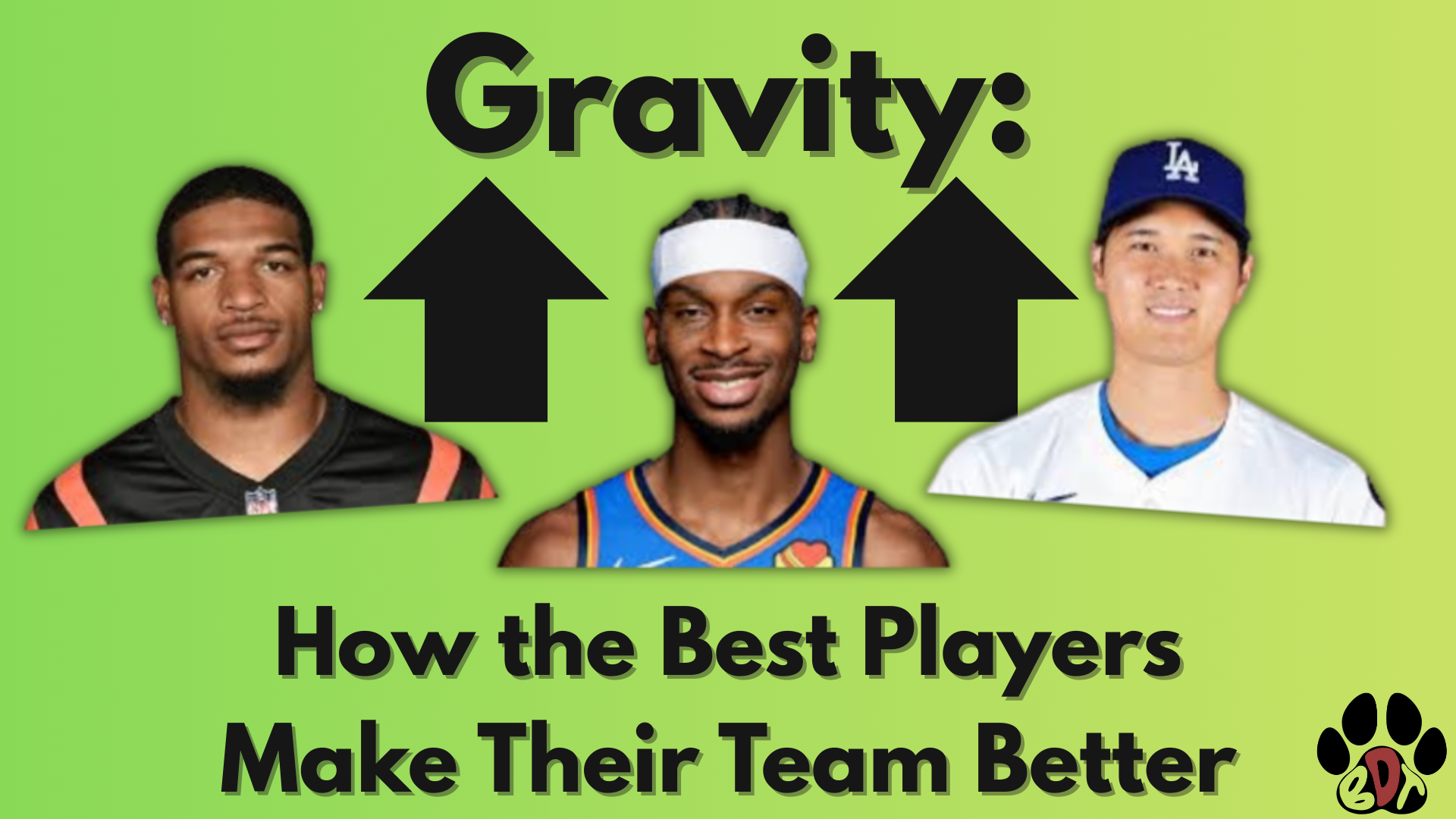
Safeties shifting over, denying the ball, playing your defense up or back, and pitching a certain way are all examples of “gravity” in sports. Gravity could be defined as the defensive attention players draw due to their skill, which forces defenses into a bind. It often does not show up in stat sheets, but it is a hidden art, and once discovered, truly shows how great players really are.
Shai Gilgeous-Alexander
Reigning Most Valuable Player (MVP), Finals MVP, scoring title holder, and point guard for the Oklahoma City Thunder, Shai Gilgeous-Alexander generates gravity almost every time he touches the basketball. Gilgeous-Alexander has some of the best footwork and speed in the National Basketball Association (NBA), and even when there is no double team, he forces the defense to collapse. Gilgeous-Alexander also has a “superstar whistle,” which puts foul pressure on defenders; not wanting to commit fouls, defenders sometimes allow Gilgeous-Alexander to get uncontested shots. When teams play drop coverage, Gilgeous-Alexander is able to stop and score, snake, and hunt switches. If teams even think about double-teaming, he is able to kick out to the corner and give his teammates wide-open catch-and-shoot threes. Especially when games get tight, the spacing his team has, along with his scoring ability, forces the defense to make split-second decisions that Gilgeous-Alexander has counters for.
Ja’Marr Chase
Ja’MarrChase, a two-time First-Team All-Pro, five-time Pro Bowler, Triple Crown winner, Offensive Rookie of the Year, and Biletnikoff Award winner, is another prime example of offensive gravity in the National Football League. His skill set forces safeties to shade over to his side or stay deeper than usual, and defensive coordinators don’t dare go man-to-man against Chase. He forces fewer defenders in the box against the run, which allows for the Bengals’ run game to thrive, and the attention allows for easier matchups for his teammates, Tee Higgins and Andrei Iosivas. Chase is also a multi-level route runner; if the defense tries to force him to run short routes, he will take what they give him, and if you don’t have a safety over top, Chase will beat you deep.
Shohei Ohtani
The consensus best player in baseball, with four MVPs, a Rookie of the Year award, and two World Series championships, might be the best example of gravity. In the World Series, he was intentionally walked four times in one game. Teams willingly put him on base to face Mookie Betts and Freddie Freeman. Pitchers pitch “safer” against him; they don’t leave pitches over the plate, throw more breaking balls away from the plate trying to get him to chase, and waste more pitches when they are ahead in the count. Ohtani allows for his teammates to perform well, too: you pitch to him and risk his skill, or you pitch around him and face traffic and Runs Batted In opportunities from some of baseball’s best, anyway.
These superstars force opponents to make decisions, which allows their team to have easier reads or opportunities. They raise the efficiency and stats of their teammates and have a psychological impact on their opponents. Gravity makes average teammates good and good teammates great. It doesn’t always show up in the stat sheet, but their impact, simply by playing the sport, creates opportunity for their team.