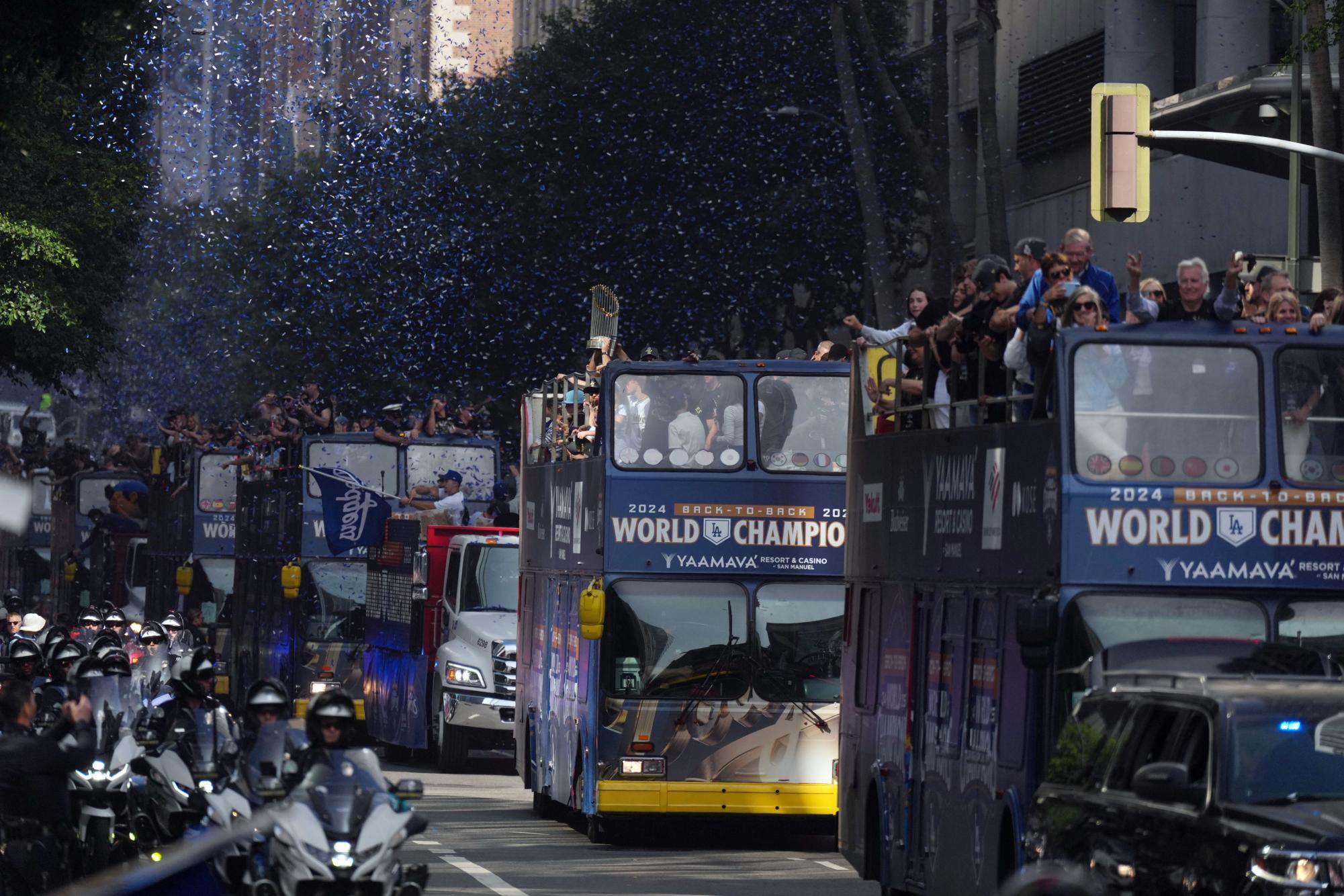
“To beat the champ, you gotta knock ‘em out!”
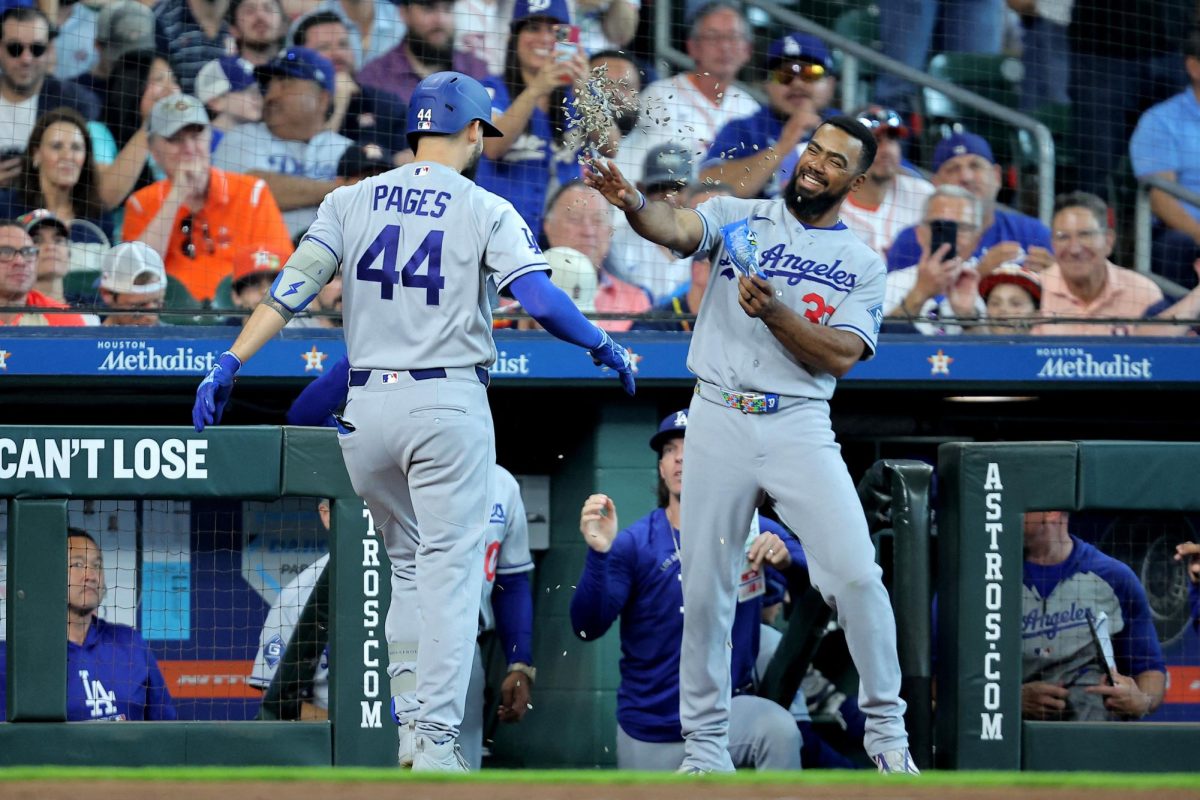
This was the call from Fox News Broadcaster Joe Davis as the Los Angeles Dodgers pulled off a double-play to record the final outs of the World Series versus the Toronto Blue Jays. In a series that featured just about everything, this was surely a World Series that baseball fans will never forget for the everlasting memories it created.
The Dodgers came in with their star-studded lineup that had been fairly inconsistent throughout the playoffs, including stars like Mookie Betts and Freddie Freeman, who had yet to find their rhythm heading into the World Series truly. A team that was known more for their explosiveness on offense still had no issues heading into the World Series thanks to their pitching staff. In just four games, the Dodgers allowed a total of four runs with their lights out pitching rotation that includes Blake Snell, Yoshinobu Yamamoto, Tyler Glasnow, and two way superstar Shohei Ohtani. Heading into the World Series, the Dodgers looked to get their bats going and only hoped that their pitching would continue its dominance.
The Toronto Blue Jays on the other hand, brought their power throughout the postseason through their bats. Notably, guys were forced to step up which included third baseman Ernie Clement and Vladimir Guerrero Jr., who was the star of the team and showed why throughout the postseason. They also included a healthy balance on their pitching rotation which included rookie Trey Yesavage, who had pitched just about a handful of times in the regular season before being placed on the postseason roster. The rotation besides Yesavage included veterans such as Max Scherzer, Kevin Gausman, and Shane Bieber.
The first two games from Toronto did not disappoint with entertainment as each team took a game of their own in their own unique, dominant fashion. The Blue Jays came out victorious in game one after an electrifying sixth inning that included nine runs. Notably, right fielder Addison Barger hit a pinch-hit grand slam that gave Toronto all the momentum.
Game two featured what the Dodgers had done best all postseason long: pitching. But there was only one man behind it; in this case, Yamamoto, who pitched his second consecutive complete game to help uplift Los Angeles as they won 5-1.
The series would then head to Chavez Ravine for the next three games, and game three in particular was one for the history books. The hitting from both sides was good enough to send this game into extra innings, tied at five apiece. From there, it was a battle of the bullpens and pure heart. Each team could not buy a run as the game would only continue longer and longer. For the Dodgers, it even got to the point where they were down to their final available bullpen pitcher, Will Klein, who had not even been on the roster in the last round. Klein stepped up to the occasion, throwing four scoreless innings, which gave the Dodgers’ offense more time to find a spark. Finally, in the bottom of the 18th inning, first baseman Freeman delivered a home run to centerfield. His walk-off gave the Dodgers a series lead at 2-1.
The next two games would be in favor of Toronto, though their bats, which had been consistent all postseason long, only continued when they needed them most. Scoring twelve runs over the next two games, they now carried the momentum back with them to Toronto, leading the series 3-2.
The Dodgers had their backs against the wall now heading into game six, but their ace Yamamoto, when needed most, came through once more for the Dodgers, allowing just one run, and gained help from his bullpen to help the Dodgers force a game seven. The game would end on a terrific play from left fielder Kike Hernández, who caught a shallow fly ball and would then throw out Barger at second base to secure the victory. With this, the Dodgers needed to ensure they would secure this victory, which forced them to turn to projected game seven starter Glasnow in the ninth, who would then earn the save. Due to the uncertainty, as the Dodgers were not promised a game seven, the move would now lead to questions about who would be the game seven starter.
Game Seven—considered to be the two greatest words in baseball. It’s go big or go home. The Dodgers would put Ohtani as their starter, who was on just three days’ rest, something he had never done in his career. Ohtani faced off against veteran Max Scherzer, who was not a stranger to the World Series. The game would begin, and it took just the third inning for the scoring to begin. Second Baseman Bo Bichette hit a three-run deep into centerfield after the prior batter, Guerrero Jr., was intentionally walked by the Dodgers. The Dodgers would slowly but surely put three runs of their own on the board, but still trailed 3-4 heading into the bottom of the ninth with their season at that point on the line.
They were just three outs away from being eliminated when the absolutely unthinkable happened. Miguel Rojas, a thirty-six-year-old veteran for the Dodgers who had hit just seven home runs during the entire regular season, came through in the clutch. He blasted a ball into the left-field seats, tying the game at four to keep the Dodgers’ season alive. It was then a chaotic bottom of the ninth inning for the Blue Jays, who were just inches away from winning. However, Rojas was able to throw out second baseman Isiah Kiner-Falefa, who was as close as it gets to home, but Dodgers catcher Will Smith was able to make the play just in time. The game would then head into extra innings, where Yamamoto, who had just pitched the day prior, volunteered to pitch and came in flawless.
It was in the top of the eleventh inning, where catcher Will Smith, fresh off a big play, would hammer a ball into the stands once more, giving the Dodgers a 5-4 lead. From there, it was Yamamoto time, and he did what he did best. With one out in the bottom of the eleventh inning, it would be a chopper to shortstop Betts, who would step up to second base and throw it in to first base to get the game-winning double play. The Dodgers were crowned once more, making them back-to-back champions.
It’s a series that will likely go down in history, and the Dodgers etched their name as a dynasty by winning back-to-back World Series titles.