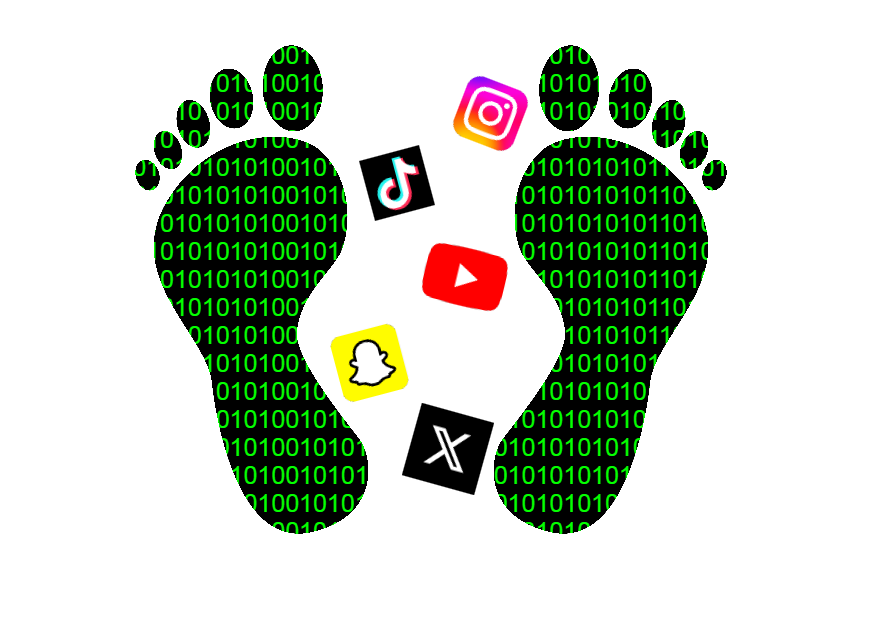
Almost every person in America interacts with the internet at least at some point in their life. We live in a world where technology reigns supreme, and the world has integrated it into our day-to-day lives. Especially with students, they engage in social media, where they can communicate with one another through digital apps.
Though the majority of the student body interacts with the internet using social media, most have known or heard of the term “digital footprint.” A digital footprint is essentially a trail of information you leave behind while browsing or interacting with the internet. For the most part, you are likely leaving behind a general footprint whenever you post anything, which can be accessed and seen by other people.
“Nowadays, with everybody on the Internet more often, I think we should be more aware of our digital footprint by being cautious of that,” Cameron Armstrong (12) said.
A digital footprint not only reveals what you leave behind on the internet, but could also reveal many things about you as a person. With social media allowing people to publish anything they want to the general public, it is no surprise that there are some cases where what you post will leave a lasting impression on you.
“There’s obviously a lot of inappropriate stuff online, and if you get yourself sucked into that, it’ll be there forever,” Tucker Pobanz (10) said.
This identity you create online is considered public data, meaning anyone could check to see what you do on the internet. A bad digital footprint could affect your opportunities, from jobs to college offers, and sometimes even trouble with the law if it happens you do something illegal online.
“There’s this one [guy who] was applying to a college. They did a background check on him, and he posted some really racist stuff. He ended up not getting the spot at the college because they found that he was not the best person; there’s definitely someone better to give it to,” Pobanz said.
It has its dire consequences when mishandled, which is why many resources, even a brief presentation given to students by the school, push for the careful consideration of a digital footprint. Students acknowledge that their reputation is at stake whenever they interact with the internet. And almost universally, they would agree that these pushes were not just necessary but should be exercised more.
“It’s very important because in modern society now, everything’s digital, so it’s better to keep a clean record,” Kyle Sy (12) said.
So, how carefully do high school students monitor what they do online? As a matter of fact, many students have become quite cautious about social media and what they post, though it is thought of subconsciously. Accepting the risks and potential consequences, they have grown more wary about their reputation online.
“Honestly, I don’t think about it too much, but now and then I realize I should think about my digital footprint because it could bite me in the back if I don’t think about it. But I tend to forget about it from time to time,” Armstrong said.
In the world of internet surveillance that we’ve come to live in, a digital footprint is now accepted to be treated as a personality. Despite being a dystopian concept of surveillance, the understanding of the digital footprint serves as a promotional tool to aid more responsible actions, keeping the internet safer, especially for students.
“I’m always watching what I post to make sure I don’t offend someone or in any way hurt people,” Pobanz said.